

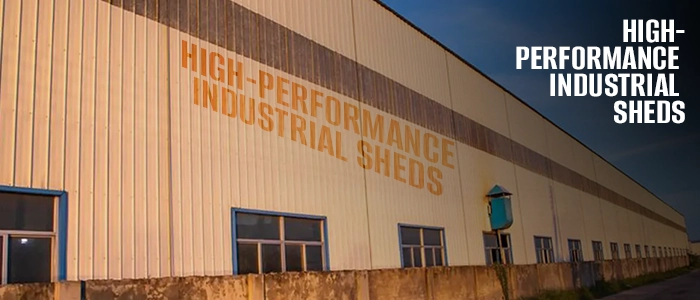
PEB Industrial Structural Shed: Understanding Design, Performance, and Industrial Fit
09 May, 2026
In Indian manufacturing clusters, especially across regions like Greater Noida, the shift toward pre-engineered systems has been gradual but decisive. Traditional fabrication methods once dominant are increasingly being replaced by modular, factory-optimized structures.
A PEB industrial structural shed sits at the center of this transition.
It is not just about faster construction. The deeper shift is toward predictability-controlled manufacturing, engineered load calculations, and repeatable quality. For B2B buyers, this often translates into reduced uncertainty during project execution.
However, procurement decisions are rarely driven by speed alone. Buyers tend to evaluate:
- structural reliability under operational loads
- adaptability to process-specific layouts
- lifecycle cost rather than upfront price
- supplier engineering capability
This is where many evaluations become nuanced and sometimes misaligned with actual project needs.
A PEB industrial structural shed is a factory-fabricated steel building system designed using pre-engineered components such as primary frames, secondary members, and cladding, assembled on-site for industrial use. It is engineered for load efficiency, faster installation, and consistent structural performance across manufacturing and storage environments.
In practical terms, the system separates design engineering from on-site construction, allowing most structural complexity to be resolved before materials reach the project location.
Technical Specifications & Key Features
A typical PEB industrial structural shed includes:
- Primary steel frames (rigid frames or portal frames)
- Secondary members (purlins, girts, eave struts)
- Roof and wall cladding systems
- Connection systems (bolted rather than welded on-site)
- Foundation interface design
Structural Parameters
While specifications vary by project, some consistent technical considerations include:
Parameter |
Typical Range / Consideration |
|
Span Width |
10 m – 60 m+ |
|
Eave Height |
4 m – 15 m |
|
Bay Spacing |
4 m – 10 m |
|
Design Load |
Wind, seismic, live, crane load (if applicable) |
|
Steel Grade |
IS 2062 or equivalent |
|
Roof Slope |
1:10 to 1:20 |
A recurring observation in industrial procurement is that buyers often focus on dimensions, but overlook load combinations and design assumptions, which ultimately govern structural performance.
Materials & Production Methodology
The performance of a PEB structure is heavily influenced by how it is manufactured not just what materials are used.
Raw Material Considerations
- High-strength structural steel (often tapered sections)
- Galvanized or pre-painted steel sheets for cladding
- Fasteners designed for corrosion resistance
- Insulation materials (PUF panels, glass wool, rock wool)
Manufacturing Approach
Unlike conventional fabrication, PEB components are:
- CNC-cut and welded under controlled conditions
- Designed using structural software (e.g., STAAD or Tekla-based workflows)
- Pre-drilled for bolted assembly
- Optimized for weight reduction without compromising strength
At manufacturing bases such as Greater Noida, companies like Guru Nanak Interiors typically operate within a system where design, fabrication, and dispatch are integrated, reducing variability between drawing and execution.
Reflection from Industry Practice
One recurring misunderstanding is assuming that all steel sheds are structurally equivalent. In reality, section optimization and connection detailing differ significantly between manufacturers.
That difference becomes visible only under stress conditions or over time.
Performance & Durability Insight
The durability of a PEB industrial structural shed depends on:
- corrosion protection systems
- structural design accuracy
- quality of fabrication and connections
- environmental exposure conditions
Key Performance Factors
1. Structural Stability
Engineered load calculations ensure resistance to:
- wind uplift
- seismic activity
- dynamic loads (machinery, cranes)
2. Corrosion Resistance
- Galvanization or protective coatings extend lifespan
- Critical in humid or coastal regions
3. Thermal Performance
- Insulation layers regulate internal temperature
- Important for process industries
4. Maintenance Behavior
- Bolted systems simplify replacement and modification
- Reduced need for structural intervention
Practical Insight
From an operational perspective, the real test of a structure is not during installation but after 2–5 years of industrial use.
Performance deviations often trace back to:
- underestimated load conditions
- poor detailing at joints
- inconsistent coating application
Applications & Use Environments
PEB industrial sheds are used across a wide range of sectors, but the suitability depends on operational dynamics.
Common Applications
- Manufacturing plants
- Warehousing and logistics hubs
- Automotive assembly units
- Textile production facilities
- Food processing units
Environment-Based Considerations
|
Environment Type |
Structural Consideration |
|
High humidity |
Anti-corrosion coatings |
|
Heavy machinery |
Reinforced foundation & frame design |
|
High temperature |
Insulated roofing systems |
|
Dust-intensive operations |
Ventilation and sealing systems |
A subtle but important point: application suitability is not just about space it is about load behavior over time.
Variants / Type Comparison (Neutral)
PEB vs Conventional Steel Shed
Aspect |
PEB Structure |
Conventional Steel Shed |
|
Design Approach |
Pre-engineered, optimized |
On-site fabrication |
|
Construction Time |
Faster |
Slower |
|
Material Usage |
Optimized, lighter |
Heavier |
|
Quality Control |
Factory-controlled |
Site-dependent |
|
Cost Predictability |
High |
Variable |
PEB vs RCC Industrial Structure
Aspect |
PEB Shed |
RCC Structure |
|
Flexibility |
High (expandable) |
Limited |
|
Construction Speed |
Faster |
Slower |
|
Initial Cost |
Lower to moderate |
Higher |
|
Load Handling |
Suitable for most industrial loads |
Better for heavy static loads |
The choice is rarely binary. It depends on use-case alignment, not just structural preference.
Buyer Evaluation Checklist
When evaluating a PEB industrial structural shed, buyers often benefit from stepping beyond surface specifications.
Key Evaluation Points
Design & Engineering
- Are load calculations clearly defined?
- Is seismic and wind data location-specific?
Material Quality
- Steel grade certification
- Coating thickness and type
Manufacturing Capability
- In-house fabrication vs outsourced
- CNC precision capability
Installation Methodology
- Bolt quality and connection detailing
- Erection supervision availability
Lifecycle Consideration
- Maintenance requirements
- Expansion flexibility
A practical pattern seen in procurement:
Decisions based solely on price tend to result in higher long-term adjustments.
Frequently Asked Questions
What is the lifespan of a PEB industrial structural shed?
A well-designed and properly maintained PEB shed can last 25–50 years, depending on environmental conditions, corrosion protection, and usage intensity.
How does a PEB shed handle heavy industrial loads?
It is engineered using load-specific calculations, including crane loads, live loads, and dynamic forces, ensuring structural stability under industrial operating conditions.
Is a PEB structure suitable for expansion later?
Yes. One of the advantages is modularity, allowing extensions in length or width with minimal disruption to existing operations.
What maintenance does a PEB shed require?
Periodic inspection of connections, repainting or recoating (if required), and checking for corrosion are typically sufficient for long-term performance.
How is a PEB shed different from a prefabricated shed?
While both are factory-based, a PEB shed is engineered specifically for structural loads, whereas prefabricated sheds may not always include detailed structural optimization.
Supply & Distribution Capability
Manufacturers operating from industrial hubs such as Greater Noida typically support Pan-India supply, leveraging:
- centralized fabrication units
- logistics coordination for large structural components
- site-specific engineering adaptation
Companies like Guru Nanak Interiors operate within this framework, where design and supply extend beyond regional limitations.
For broader technical details and system configurations, the primary product reference can be reviewed here:
https://www.portablecabinmanufacturers.com/industrial-shed/
Conclusion
The evaluation of a PEB industrial structural shed often appears straightforward at first glance. Dimensions, cost, and timelines are visible.
But deeper considerations load behavior, material optimization, manufacturing precision tend to define long-term performance.
In many ways, the structure reflects the thinking behind it.
If you are evaluating this product for an upcoming project, reviewing specifications, engineering assumptions, and application conditions carefully can help reduce procurement risks.
For further technical guidance or product-specific clarity, you can connect with the team at Guru Nanak Interiors:
https://www.portablecabinmanufacturers.com/contact-us/


